TL;DR
- A plumbing emergency in a retail store moves faster than it does at home. More floor area, more stock at risk, and customers on the premises make the first few minutes critical.
- Stop the water first. Every extra minute it runs expands the damage footprint and the repair bill.
- Know where your isolation valves are before something goes wrong. Finding them during a flood is too late.
- Water near electrics changes everything. Get people clear and kill the power to affected zones before you do anything else.
- Call a licensed 24/7 plumber immediately. Document the damage for insurance while you wait.
Why a retail plumbing emergency is a different problem
At home, a burst pipe is stressful. In a retail store, it’s a trading incident. You’ve got customers to move, stock to protect, staff to direct, and a floor area that water can spread across in minutes. The decisions you make in the first five minutes determine whether you’re dealing with a contained repair or a week-long closure.
The most common retail plumbing emergencies in Sydney are burst or split pipes, blocked toilets or floor drains that overflow, sewage backups in the bathroom or kitchenette, and failed flexi hoses under sinks. Each one has a slightly different first move, but the core sequence is the same: stop the water, protect people, contain the spread, call a licensed plumber.
Step 1: Stop the water immediately
This is always the first move. Every second water keeps running, it finds a new path across your floor, under your shelving, and into your stock. Your job before the plumber arrives is to cut the supply, not to fix the fault.
In most Sydney retail tenancies, you’ll have two options:
- Fixture isolation valve: The small valve directly behind or under the affected fixture — toilet, sink, or appliance. Turn it clockwise until it stops. This cuts water to just that fitting without affecting the rest of the store.
- Main building stop valve: Usually near the water meter at the front of the building or in a plant room. Turning this off cuts water to the whole tenancy. Use it if the fault is in a pipe you can’t isolate at the fixture, or if you can’t find the source quickly.
If you’re in a multi-tenancy building, the main stop valve may be in a shared area managed by the building owner or strata. Know where it is before you need it. Ask your building manager if you’re not sure.
Step 2: Get people clear — especially if water is near electrics
Water and electricity in the same zone is the point where a plumbing problem becomes a safety emergency. If water is spreading toward power outlets, display lighting, fridges, point-of-sale equipment, or any other electrical fitting, cut the power to that zone at the switchboard before anyone goes near it.
Don’t wait to see if the water reaches the outlet. Move customers and staff away from the wet area first, then deal with the power. This isn’t overcautious — it’s the correct sequence.
If there’s any doubt about whether the electrics are compromised, treat the zone as live until a licensed electrician or plumber confirms it’s safe.
Step 3: Protect your stock and fittings while you still can
Once the water is stopped and people are clear, shift your focus to what’s still dry. Water moves toward the lowest point on the floor, which is often your stockroom, a display area, or the base of shelving. A few minutes of quick work here can save a lot of product.
- Move stock off the floor and onto higher shelving or benches
- Pull rugs, floor mats, and cardboard away from the wet area — they absorb water and stay damp for days
- Shift any timber furniture or display units that are sitting in or near the water
- Unplug and move portable electrical equipment away from the wet zone
- Use towels, mops, or buckets to slow the spread — but don’t spend time on a full cleanup until the plumber has been
Don’t start pulling at pipes, tightening fittings, or pouring anything into a blocked drain. You’re containing, not repairing. Interference before the plumber arrives can make the fault harder to diagnose and the repair more expensive.
Step 4: Photograph everything before you clean up
Before you mop, before you move stock back, take photos. Your insurer will want evidence of the damage as it was, not after you’ve tidied up. This includes:
- The source of the fault (pipe, fitting, toilet, drain)
- Water spread across the floor
- Any damaged stock, shelving, or fixtures
- Wet walls, skirting boards, or ceiling panels if water has tracked upward
Date-stamped phone photos are usually sufficient. Send them to yourself by email so you have a timestamped record. If you have a security camera system, save the footage from around the time the fault started.
Step 5: Call a licensed 24/7 plumber straight away
Once the water is isolated and the area is safe, call a licensed plumber. Don’t wait to see if it settles or try to manage it yourself. Commercial tenancies have more at stake than a home — every hour of downtime has a cost, and water that sits in walls, under flooring, or beneath shelving starts causing secondary damage (mould, rot, swelling) within 24 to 48 hours.
When you call, tell the plumber:
- What type of fault it appears to be (burst pipe, blocked drain, overflowing toilet, etc.)
- Whether the water is stopped or still running
- Whether there’s water near electrics
- The address and access details for your tenancy
- Whether the building is still open or if customers are on site
A plumber who knows the full picture before they arrive can bring the right tools and get the repair done in one visit. For guidance on what to tell a plumber when you call, see our post on how to call an emergency plumber so they arrive ready.
The faults most likely to hit a retail store
Not every plumbing emergency looks the same in a retail setting. Here’s what tends to show up and what makes each one different:
Burst or split pipe
Often happens in older Sydney commercial buildings where pipes haven’t been inspected in years. Can also be triggered by water hammer (pressure surge) or a fitting that’s been slowly corroding. Water comes fast and doesn’t stop until the supply is isolated. This is a call-now fault — don’t wait until morning.
Blocked or overflowing toilet
The most common retail bathroom fault. In a store with high foot traffic, toilets handle a lot more volume than a residential one. A blockage that causes an overflow isn’t just a plumbing problem — it’s a hygiene issue that requires the bathroom to be closed immediately. Don’t let customers or staff use it until it’s cleared and cleaned. Chemical drain cleaners won’t fix a proper blockage and can damage the pipework.
Backed-up floor drain
Floor drains in retail kitchenettes, cool rooms, or back-of-house areas can back up when the line downstream is blocked. If sewage or grey water is coming up through the drain, close the area, stop any water running into that drain, and call a plumber with jetting equipment. This type of fault can be a health code issue if it’s not resolved quickly.
Failed flexi hose
The braided stainless flexi hoses under sinks and behind toilets have a finite lifespan — typically 10 years, sometimes less. When one fails, it can release a full mains-pressure flow in seconds. This is the fault that floods a storeroom in minutes. The fix is quick once a plumber is on site, but the water damage can be significant if it runs for any length of time.
Hot water system fault
If your store has a kitchenette or bathroom with hot water, a failing system can leak from the tank, the pressure relief valve, or the connections. A slow drip from a relief valve is a warning sign; active leaking from the tank itself needs same-day attention.
What to tell your building manager or landlord
If you’re a tenant, your lease will set out who’s responsible for plumbing repairs. As a general rule, faults in the internal pipework of your tenancy are your responsibility to report and manage. Faults in shared building infrastructure — main risers, common area pipes, external drainage — are typically the building owner’s problem.
Notify your building manager or landlord in writing (email or text) as soon as the fault is contained. Include the time it started, what you’ve done so far, and whether you’ve called a plumber. Keep a copy. If the fault originated in shared infrastructure and caused damage to your stock or fit-out, you’ll want a written record for any insurance or compensation discussion.
After the plumber leaves: the recovery steps that matter
The repair being done doesn’t mean the job is finished. Water that’s been sitting in walls, under flooring, or in shelving cavities needs to dry out properly. Mould can establish in as little as 24 to 48 hours in damp conditions, and Sydney’s humidity doesn’t help.
- Keep the affected area ventilated — open windows and doors if it’s safe to do so
- Don’t replace stock or reinstall shelving against walls that are still damp
- Check skirting boards, wall panels, and any timber fixtures for swelling or warping over the following days
- If the water reached the ceiling of a lower floor or a shared wall, notify the adjoining tenancy or building manager
- Ask your plumber for a written record of the fault, the repair carried out, and any compliance certificate if one is required
For a full post-emergency recovery checklist, see what to do after the emergency plumber leaves.
The preparation that prevents most of this
The retail businesses that get through a plumbing emergency with the least disruption are the ones that knew where their valves were before anything went wrong. A few things worth sorting now, before you need them:
- Label your isolation valves. Every fixture valve and the main stop valve should be clearly marked so any staff member can find and use them without hunting.
- Check your flexi hoses. If they’re more than 10 years old, or if you can see corrosion or swelling at the connections, get them replaced before one fails mid-trading.
- Know your building’s plumbing layout. Where does the main stop valve sit? Is there a floor drain in the back area? Where does the hot water system live?
- Have a plumber’s number saved. Not a franchise call centre — a direct number to a licensed local plumber who answers 24/7 and can tell you honestly whether it’s a tonight job or a morning job.
- Brief your staff. Anyone working a closing shift should know where the main valve is and what to do if they find water on the floor.
A yearly plumbing check of your tenancy is also worth considering. A licensed plumber can spot corroding fittings, ageing flexi hoses, and slow drain buildups before they turn into a trading emergency.
Need a plumber for your Sydney retail store?
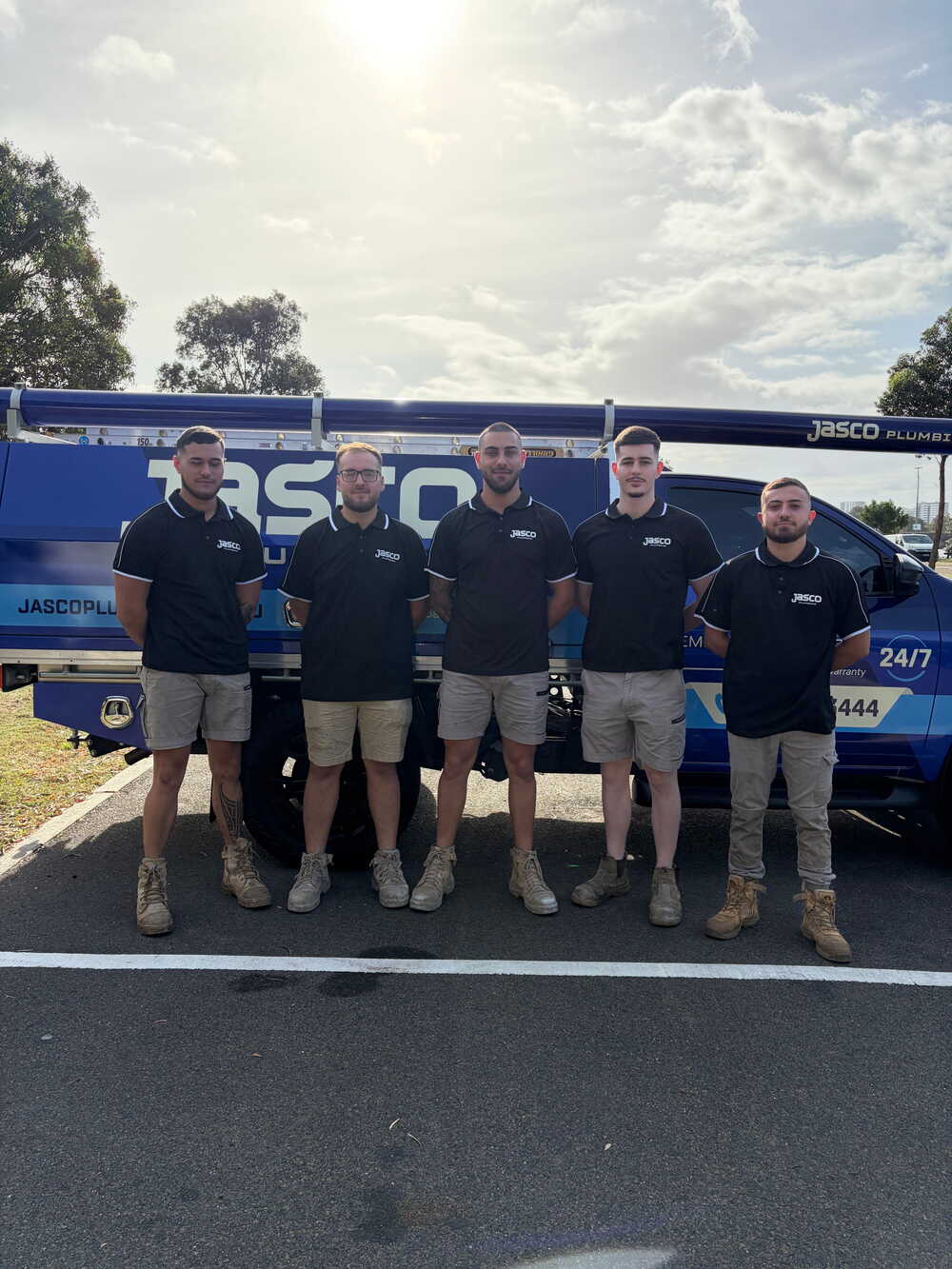
Jasco Plumbing handles commercial plumbing emergencies across Sydney, 24 hours a day. We’re a licensed team (NSW #488187C), not a call centre — when you ring, you’re talking to someone who can give you a straight answer on what to do right now and how fast we can get there. Fixed price before we start. No surprise invoices.
Call us or check our services to find out how we can help with your store’s plumbing.